









5 Steps to reduce machine downtime and maintenance costs
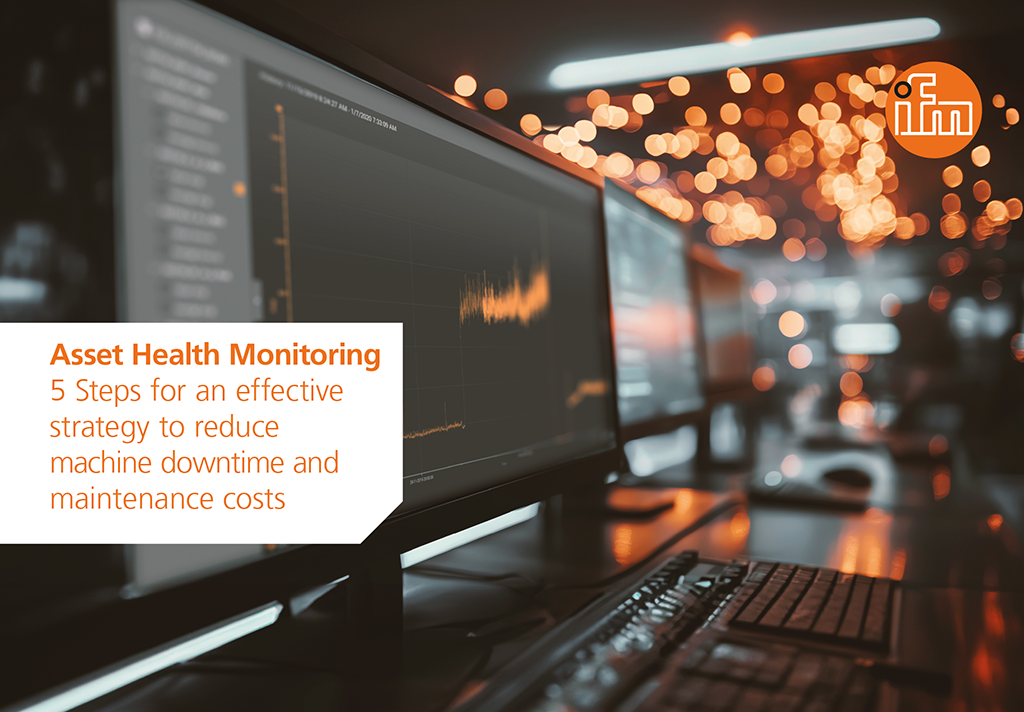
Effective asset health monitoring is essential for improving machine uptime, reducing maintenance costs, and ensuring operational efficiency. Download the guide to understand the five key steps to successfully implement an asset health monitoring strategy. These steps are;
Step 1: Identify Critical Assets and Conduct a Risk Audit.
Establish evaluation criteria, conduct dependency analysis, and prioritise high-risk assets. It is necessary to establish standardised criteria to evaluate each asset and systematically identify the most critical one. Consider not only the asset, but also the effect that its failure will have on other areas of the plant.
Step 2: Build a Data Collection and Analysis Ecosystem
Deploy sensors, integrate with IIoT platforms, and establish a centralised storage and processing system. The next step is to understand what type of data is needed, how it will be collected, stored, and accessed to enable data-driven decision-making. For example vibration sensors on rotating equipment, such as pumps or motors, can detect mechanical damage to bearings and gears while also identifying root causes like imbalance or misalignment. Temperature sensors on furnaces or hydraulic systems can identify overheating or uneven heating issues. Finally, pressure sensors on pipelines or boilers can detect leaks or blockages.
Step 3: Implement Real-Time Data Analysis and Visualisation Tools
Use modern software to analyse trends, detect anomalies, and improve decision-making. IO-Link technology provides a simple method of enabling real-time data collection into any higher-level software system. This foundational technology bypasses the PLC for data collection, ensuring it is not overburdened with complex data analysis or computations.
Step 4: Develop and Implement Predictive Maintenance Strategies
Transition from reactive maintenance to AI-driven predictive models for enhanced reliability. Every industrial operation relies on its maintenance team to keep production running, but the way maintenance is conducted has evolved. This is the journey from reactive to predictive maintenance.
Step 5: Establish a Closed-Loop Process for Continuous Improvement
Regularly review performance metrics, optimise data models, and upskill teams to ensure long-term asset health success. The final step in implementing Asset Health Monitoring is to continuously monitor system performance and optimise it over time. This ensures that the Asset Health Monitoring programme delivers long-term value and adapts to evolving business needs.