








A leader’s guide: Five ways to bring more value from your operations
Cost pressure drives investment, but most capacity is already there. Understand what your system could deliver before deciding your next move.
What keeps you up at night as an operations leader is almost never just one piece of the puzzle. It is the pressure to reduce cost while material prices continue to rise, the expectation to increase output without adding headcount, and the reality of pushing ageing equipment to deliver more than it was ever designed for. These are not new challenges. They come with the role.
More often than not, the answers to those pressures are already sitting within the operation, in the gap between what is currently delivered and what the system is capable of. This is where the real opportunity sits, and how much of it can be realised without adding risk to the business.
Most leaders can describe the pressure with precision, but very few can quantify what solving it would actually deliver. That is where decisions become difficult. As cost pressure increases and investment becomes harder to justify, getting this wrong is expensive. Here are five ways for leaders to bring more value to their operations by approaching this differently.
1. Stop treating capacity as something you buy
Many operations appear constrained but are not operating at their true limit. The gap sits in how consistently the system runs, not what it owns.
2. Stop managing output and start managing flow
Output reflects what is delivered, not how it is achieved. Instability is often hidden behind effort, and it carries cost, creating a constant recipe of firefighting.
3. Expect the issue to sit across the system
In one European nutraceutical operation, output failed to recover after a restart. The problem was not a single bottleneck, but a loss of alignment across flow, communication, and execution.
4. Shift the conversation to financial impact
Without a clear estimate, improvement remains a discussion and investment becomes the default response, with no clear point B in terms of what needs to be realised.
5. Be clear on the value before you invest
Even a directional view begins to change how decisions are made, but most organisations never take that first step.
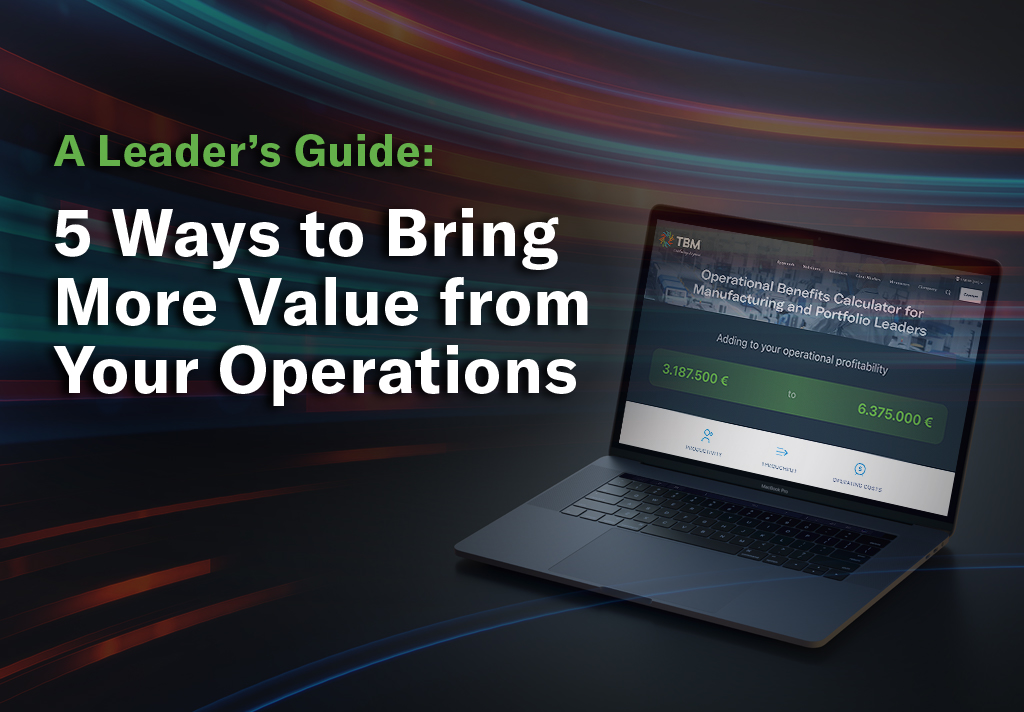
To explore how these levers apply in practice, the full guide breaks down where capacity and cost are typically lost across OEE, throughput, and productivity. It also introduces a practical calculator to estimate what those gaps could represent financially within your own operation, often translating performance losses into a clear range of potential value before deciding your next move.