


Why legacy ERP is holding manufacturers back
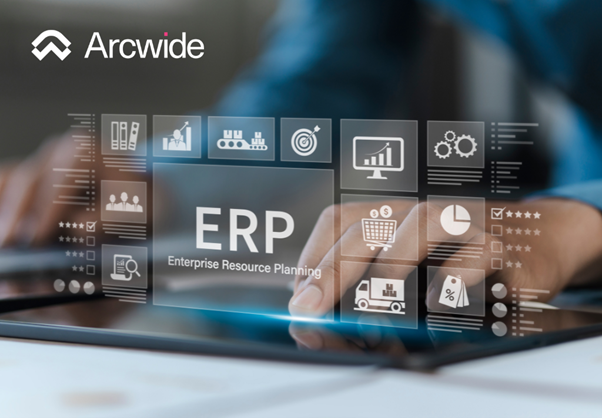
As manufacturing environments grow more complex, many organisations are reassessing whether their legacy ERP system is still providing the clarity, flexibility and integration they need.
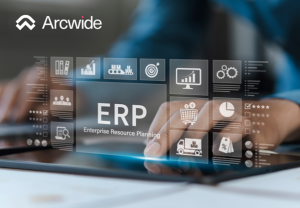
Enterprise Resource Planning (ERP) systems were introduced to simplify manufacturing operations by providing a single source of truth across the organisation. For many manufacturers, ERP became central to planning, production, finance and supply chain decision‑making.
Over time, however, that promise has become harder to fulfil. Customisation, bolt‑on applications and third‑party integrations have turned many ERP environments into fragmented landscapes.
While these systems may still function day-to-day, they often struggle to keep pace with changing operational demands, quietly limiting visibility, agility and growth.
The hidden cost of fragmented ERP systems
Manufacturers today face increasing pressure to respond quickly to change, optimise performance and manage risk. Fragmented ERP landscapes make this significantly more difficult.
Disconnected data models and inconsistent processes prevent organisations from achieving a true “single version of the truth”, often relying on specialist IT intervention for reporting, while even small system changes can escalate into complex integration projects.
These challenges may not always be visible, but they affect operational efficiency and confidence every day.
Why ERP modernisation is back on the agenda
ERP modernisation is once again a priority – not as a technology refresh, but as a business necessity.
As manufacturers explore new capabilities such as predictive maintenance, intelligent scheduling and AI‑driven analytics, the limitations of disconnected systems become more apparent.
These initiatives rely on consistent data and tightly integrated processes. Where legacy ERP environments fall short, the ability to compete and adapt is undermined.
Increasingly, organisations are rethinking modernisation around more unified platforms designed to evolve alongside business needs.
A unified approach to manufacturing ERP
A modern ERP approach brings core manufacturing, asset management, service, supply chain and quality together within a single, cohesive architecture. This reduces reliance on brittle integrations, improves data consistency and enables greater operational insight.
More importantly, it allows manufacturers to focus on outcomes such as improving uptime, increasing responsiveness and supporting continuous improvement, rather than maintaining increasingly complex legacy technology.
About Arcwide, an award‑winning IFS Cloud business partner
Arcwide is an award‑winning IFS Cloud business partner specialising in business transformation centred on the IFS solution suite.
Drawing on our IFS and BearingPoint heritage, we bring together deep IFS Cloud expertise and strategic consulting capability to help manufacturers move beyond legacy ERP and realise long‑term value with IFS Cloud.
To explore these topics in more depth, download Beyond Legacy ERP: A New Path for Modern Manufacturers, created by IFS and delivered by Arcwide as part of its work supporting manufacturing transformation.